

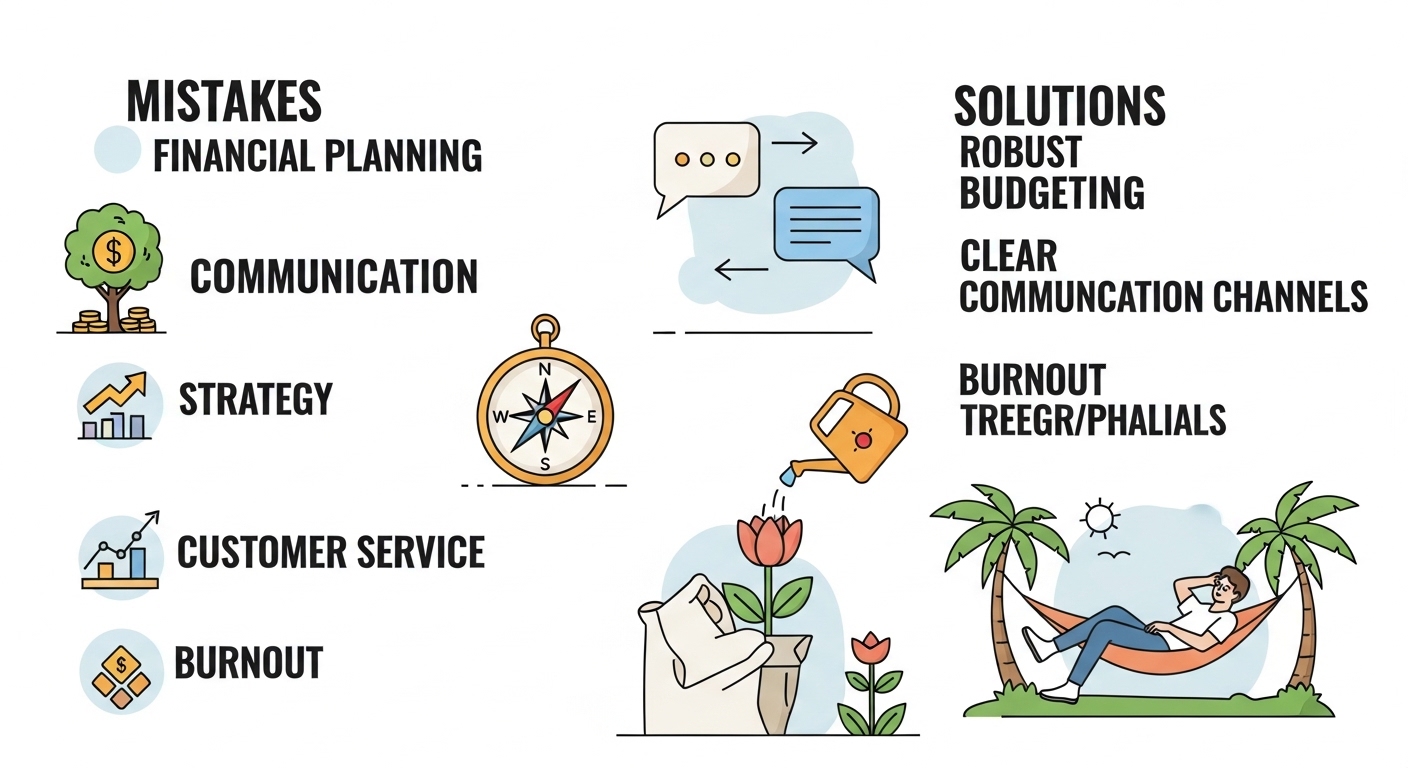
Running a business successfully requires more than just a good idea. Many entrepreneurs fail not because of lack of opportunity, but due to avoidable mistakes in planning, management, and decision-making. Understanding common business mistakes and learning how to prevent them can significantly increase long-term success and stability in competitive markets.
Poor Financial Management
Weak Cash Flow Control
Weak cash flow control is one of the biggest reasons businesses fail because companies often spend more than they earn without proper tracking. Maintaining clear cash flow records, monitoring expenses, and forecasting income helps businesses stay financially stable and avoid sudden liquidity crises that can damage operations long term.
Lack of Budget Planning
Lack of budget planning leads to uncontrolled spending and financial confusion in business operations. Without a clear budget, companies struggle to allocate resources effectively, resulting in wasted investments and missed opportunities. Proper budgeting ensures financial discipline, better decision-making, and long-term sustainability in competitive markets.
Overinvestment in Expansion
Overinvestment in expansion occurs when businesses grow too quickly without stable revenue or infrastructure. This can lead to financial strain, operational inefficiencies, and increased risk of failure. A gradual and data-driven expansion strategy ensures sustainable growth while maintaining financial balance and operational stability over time.
Ignoring Profit Margins
Ignoring profit margins can cause businesses to focus on sales volume instead of actual profitability. Even high revenue businesses may fail if costs are not controlled properly. Regularly analyzing profit margins helps identify inefficiencies and ensures long-term financial health and sustainable business growth.
Poor Expense Tracking
Poor expense tracking results in financial leakage and unclear understanding of business spending patterns. Without accurate records, companies cannot make informed financial decisions. Implementing accounting tools and regular audits helps maintain transparency, control costs, and improve overall financial performance effectively.
Weak Marketing Strategies
No Target Audience Focus
Not identifying a clear target audience leads to ineffective marketing campaigns and wasted resources. Businesses must understand customer needs, preferences, and behavior to create relevant messaging that attracts the right audience and improves conversion rates and brand engagement over time.
Inconsistent Branding
Inconsistent branding confuses customers and weakens brand identity across platforms. When messaging, visuals, and tone vary, businesses lose credibility and recognition. Maintaining consistency across all marketing channels builds trust, strengthens brand value, and improves long-term customer loyalty and market positioning.
Poor Online Presence
A weak online presence limits business visibility and customer reach in today’s digital world. Without websites, social media, or SEO strategies, businesses struggle to attract modern consumers. Building a strong digital presence is essential for growth, credibility, and competitive advantage.
Ignoring Digital Marketing
Ignoring digital marketing reduces business growth opportunities in an increasingly online marketplace. Companies that rely only on traditional methods miss out on global audiences. Digital marketing strategies such as SEO, social media, and email campaigns help increase visibility and customer engagement.
Lack of Customer Engagement
Lack of customer engagement results in reduced loyalty and weak relationships with clients. Businesses that do not interact with their audience lose trust and retention opportunities. Active communication through feedback, support, and content helps strengthen relationships and improve long-term business success.
Poor Customer Service
Slow Response Times
Slow response times frustrate customers and reduce satisfaction levels significantly. In competitive markets, customers expect quick support and solutions. Improving response systems through automation, trained staff, and communication tools helps enhance customer experience and build long-term trust and loyalty.
Ignoring Customer Feedback
Ignoring customer feedback prevents businesses from identifying problems and improving services. Customer opinions provide valuable insights into product quality and service performance. Listening and acting on feedback helps improve satisfaction, strengthen relationships, and increase long-term business success and credibility.
Lack of Support Systems
Lack of proper support systems leads to poor customer experience and unresolved issues. Businesses must invest in help desks, chat support, and service teams to ensure customers receive timely assistance, improving satisfaction and long-term retention rates effectively.
Poor Communication Skills
Poor communication with customers creates misunderstandings and dissatisfaction. Clear, polite, and informative communication helps resolve issues quickly and builds trust. Training staff in communication skills is essential for improving customer service quality and strengthening brand reputation in the market.
No After Sales Service
No after-sales service reduces customer loyalty and repeat business opportunities. Supporting customers after purchase builds trust and long-term relationships. Offering warranties, follow-ups, and support services ensures better customer satisfaction and strengthens overall brand value and reliability.
Ineffective Business Planning
No Clear Business Goals
Without clear business goals, companies lack direction and purpose in their operations. Goals help guide decisions, measure progress, and ensure focused growth. Setting realistic and measurable objectives is essential for long-term success and strategic business development.
Poor Market Research
Poor market research leads to incorrect business decisions and failed strategies. Understanding market demand, competition, and customer behavior is essential before launching products or services. Proper research reduces risks and improves chances of success in competitive industries.
Weak Competitive Analysis
Weak competitive analysis prevents businesses from understanding their rivals and market position. Without analyzing competitors, companies miss opportunities for improvement and innovation. Regular competitor analysis helps businesses stay updated, competitive, and strategically strong in dynamic markets.
No Risk Management Plan
No risk management plan exposes businesses to unexpected financial and operational losses. Identifying risks and preparing strategies to handle them ensures stability and resilience. Risk planning helps businesses survive challenges and maintain long-term sustainability in uncertain environments.
Ignoring Data Insights
Ignoring data insights results in poor decision-making and missed opportunities. Business data provides valuable information about customer behavior, performance, and trends. Using analytics tools helps improve strategies, increase efficiency, and support smarter long-term business decisions.
Employee Management Issues
Poor Hiring Practices
Poor hiring practices lead to unskilled employees and reduced productivity. Hiring the right talent is essential for business success. Proper recruitment processes, interviews, and skill assessments help build a strong workforce that supports growth and efficiency.
Lack of Training Programs
Lack of training programs reduces employee performance and limits skill development. Continuous training helps employees stay updated, improve productivity, and adapt to new technologies. Investing in training ensures better performance and long-term business success.
Low Employee Motivation
Low employee motivation results in poor performance and high turnover rates. Motivated employees are more productive, creative, and committed. Providing incentives, recognition, and a positive work environment helps improve motivation and overall business productivity.
Poor Leadership Style
Poor leadership creates confusion, low morale, and ineffective teamwork. Strong leadership is essential for guiding employees, making decisions, and achieving goals. Effective leaders inspire, communicate clearly, and support team development for long-term organizational success.
High Employee Turnover
High employee turnover increases recruitment costs and disrupts business operations. Retaining skilled employees is important for stability and growth. Improving workplace culture, benefits, and employee satisfaction helps reduce turnover and strengthen organizational performance.
Technology and Innovation Mistakes
Ignoring New Technology
Ignoring new technology slows business growth and reduces competitiveness. Modern tools improve efficiency, automation, and productivity. Businesses that adopt technology early gain a strong advantage in fast-changing markets and improve overall performance.
Weak Cybersecurity Measures
Weak cybersecurity exposes businesses to data breaches and financial losses. Protecting digital systems is essential in today’s online environment. Strong security protocols, encryption, and monitoring systems help safeguard sensitive information and maintain customer trust.
Outdated Business Systems
Outdated systems reduce efficiency and slow down operations. Modern software and automation tools improve accuracy and productivity. Upgrading systems regularly ensures better performance and supports business growth in competitive industries.
Lack of Innovation
Lack of innovation prevents businesses from growing and adapting to market changes. Innovation drives creativity, competitiveness, and new opportunities. Encouraging new ideas and continuous improvement is essential for long-term success.
Poor Digital Transformation
Poor digital transformation limits business efficiency and customer reach. Adopting digital tools and online platforms improves operations, communication, and marketing. Successful digital transformation is crucial for staying relevant in modern business environments.
FAQs
What is the biggest business mistake
Poor financial management is one of the most common and critical business mistakes.
How can businesses avoid failure
By planning properly, managing finances, and understanding customer needs.
Why is customer service important
It builds trust, improves satisfaction, and increases customer retention.
What causes small business failure
Poor planning, weak cash flow, and lack of marketing are major causes.
How important is innovation in business
Innovation is essential for growth, competitiveness, and long-term success.
Conclusion
Common business mistakes such as poor financial control, weak marketing, bad customer service, and lack of planning can significantly impact long-term success. However, these issues can be avoided through proper strategy, innovation, and continuous improvement. Businesses that focus on discipline, customer satisfaction, and adaptability are more likely to achieve sustainable growth and long-lasting success in competitive markets.